


Last week, I gave both a basic overview and an example of margin and markup. As promised, I’m going to discuss sales mix this week. Let’s say you sell apples, oranges, and bananas, and they all have different margins: 50 percent on apples, 40 percent on oranges, and 80 percent on bananas. What would you rather sell more of (to maximize profit)? Bananas! (If you answered either apples or oranges, this post really is for you and will help you better understand how sales mix can affect your business.)
Recall from last week’s blog the formula for margin:
Margin % = (Sale Price – Cost)/Sale Price
Using this formula, we can find the cost for each one of our three fruits. We just plug the numbers we do know into the formula to get the unknown cost:
- Apples: If we sell each apple for $1 and the margin is 50 percent, it means our cost is $0.50 and profit is $0.50.
- Oranges: If we sell each orange for $1 and the margin is 40 percent, it means our cost is $0.60 and profit is $0.40.
- Bananas: If we sell each banana for $1 and the margin is 80 percent, it means our cost is $0.20 and profit is $0.80.
Let’s say that on Saturday, you sold 5 apples, 3 oranges, and 2 bananas at $1 each. Your total sales for the day would be $10.
Recall your cost for each fruit: $0.50 for each apple, $0.60 for each orange, and $0.20 for each banana. Now use those numbers to derive the total cost for those 10 pieces of fruit:
($0.50 x 5) + ($0.60 x 3) + ($0.20 x 2) = $2.50 + $1.80 + $0.40 = $4.70
You can use the original equation for Margin Percent to find the blended margin:
Blended margin % = (Sale Price – Cost)/Sale Price
Or in this case:
Blended margin % = ($10 – $4.70)/$10 = 0.53
Your sales mix of apples, oranges, and bananas yielded a blended margin of 53 percent.
In this example, bananas boosted your margin heavily (it was 80 percent) even though they were the poorest selling fruit (only 2 were sold).
Now let’s take a look at some revised numbers that still yield the same total sales for the day (i.e., $10).
- If you sold only apples that day, your margin would have been 50 percent, and your cost would have been $5. You would have made $5 profit.
- If you sold only oranges that day, your margin would have been 40 percent, and your cost of goods would have been $6. You would have made $4 profit.
- If you sold only bananas that day, your margin would have been 80 percent, and your cost of goods would have been only $2. You would have made an astounding $8 profit!
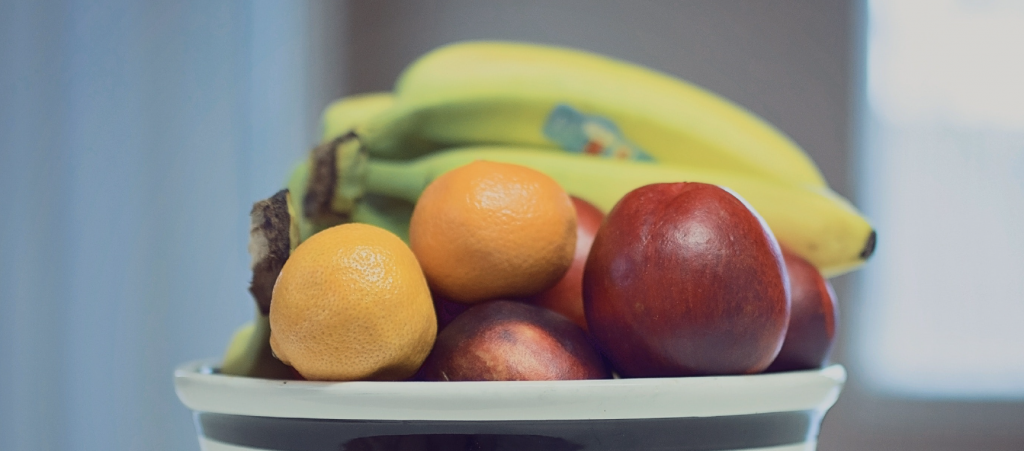
What did you want to sell more of??? Bananas, of course.
But in the real world, very few businesses are selling only their most profitable item. Businesses have to offer a variety of items (and sometimes loss leaders) to attract customers.
Take, for example, my manufacturing business. My margins stretch over a wide span. Earpads and eartips have the largest margin, cases and cables have middle margins, and partnership manufacturing like headphones and co-branded items have the lowest margin. Should I stop selling the lower margin items altogether? I don’t think so, because I believe they add value to my brand. What I do need to be conscious of is the sales mix. I have to ask myself, “What percentage of my sales comes from these lower margin items?” I also need to consider how to balance my sales of higher- and lower-margin products to achieve a blended margin (or margin after factoring in my sales mix) that keeps me profitable.
In restaurants, liquor and soft drinks often yield the highest margin. In laundromats, it’s a wash and fold service. In retail, accessories usually provide the largest margins. Restaurants won’t stop selling food, however, laundromats won’t stop offering self-service, and retailers aren’t going to stop selling their main goods. Why? Because each one of those businesses needs to achieve volume and offer items that attract customers who buy its higher margin items.
Now that you have an idea of sales mix, I challenge you to identify the margins of your top products/services. (Yes, the cost of services can be run through margin calculations too, and those calculations factor in how much labor is required to complete different tasks.) Also consider what percentage of your sales (in the last month or quarter depending on how you prepare your books) came from those items. What margin did you think your business had, and what was it really when you zeroed in on your blended margin (from your sales mix)?
The theme of last week’s blog post was, “Don’t ignore the numbers.” This week, it’s “Knowing your numbers.” Knowing your numbers is critical to the success of your business. You’re not going to succeed just by showing up at business meetings. You need to be able to identify, analyze, and solve financial problems that arise in the ordinary course of business. I have mentioned both Profit Mastery and Profit Soup before. Courses focused on these topics deal with many other important financial literacy concepts. If you find yourself struggling with these subjects, consider taking one of these courses or something similar.
1 Comment
Bud Maltin
????????